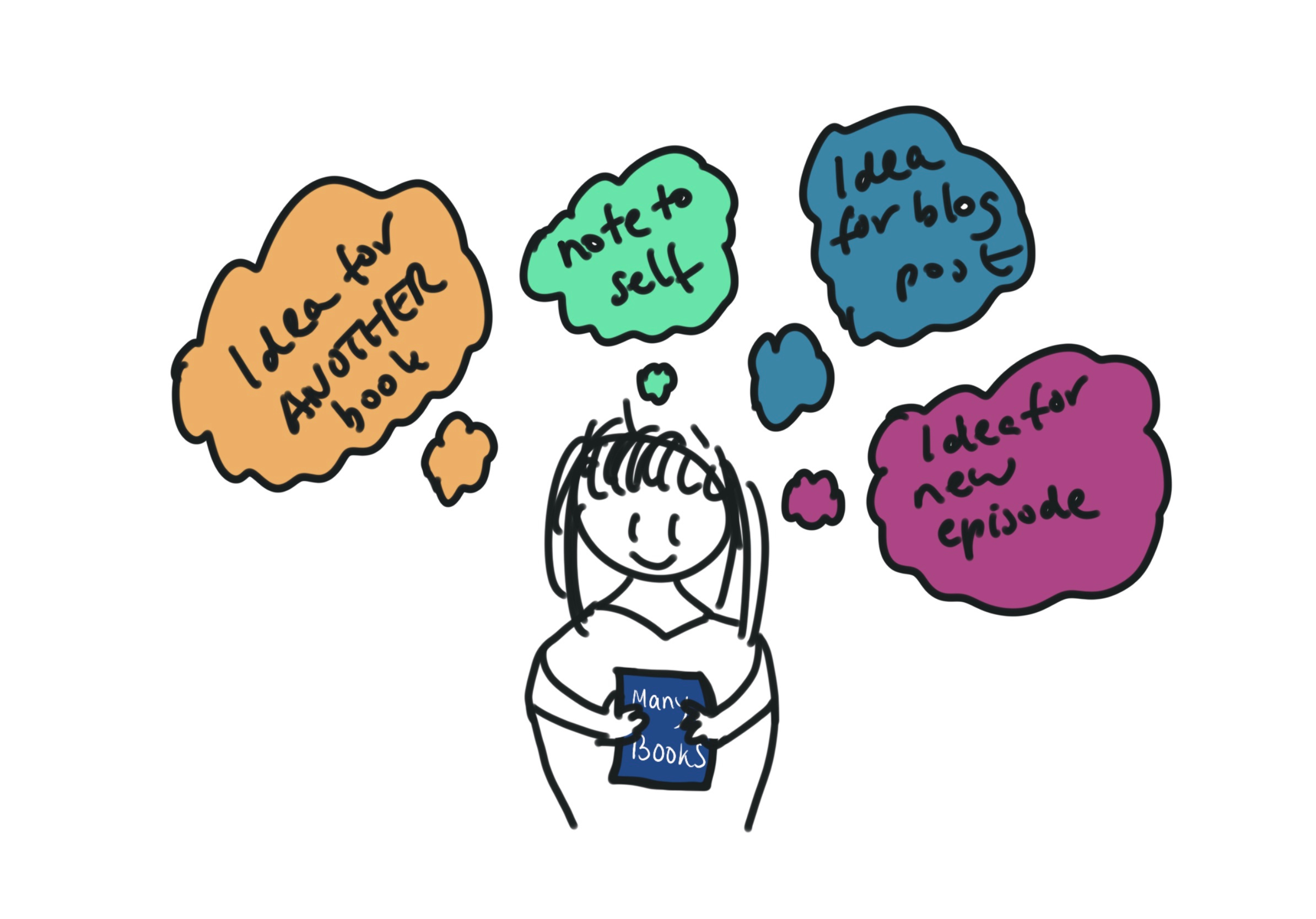
A few posts ago, I “announced” that I would stop writing about AI in this blog, but suggested I’d probably come back and talk to recommend some books on the subject. That suggestion prompted one of you to message me (Hello Mark, waving emoji) to say that yes, that was a great idea as there’s so much noise on the topic now.
My initial plan was to compare three books in one post.
But that’s a bit daunting.
And what’s daunting but optional, never gets done.
Instead, I’ll start by recommending Code Dependent - Living in the Shadow of AI, by Madhumita Murgia. (I love the title, don’t you?)
Two things happened yesterday that prompted that choice:
1. While searching for notes in my Remarkable on the three books, I found I had extensive notes on ONE book. (The only note I had on comparing three books was a note saying that all their titles started with the letter C - laughing emoji.)
Usually I export the notes from my Kindle as PDFs and at some point, I read them to remind myself of the content of the book and what resonated with me at the time of reading.
2. I heard something that prompted me to come and tell you about a book.
I’m taking a Coursera course on writing memoir, and in the module on the personal essay, the lecturer said:
“You might write reviews, or you might write criticism for a blog of your own or even for a magazine article because "it's a discipline," according to Mary Karr, "that will make you find evidence for your opinions and make you a crisper thinker.""
(Quote from The Art of Memoir.)
3. And today, I’m nervous because I’m delivering three Pilates classes spread throughout the day, with a knee that can’t flex, so posting this distracts me and calms me down.
So, here I am.
I’m going to try to be “crispy”.
My Book Recommendation
Of the three books I wanted to recommend on Artificial Intelligence, Code Dependent is my favourite.
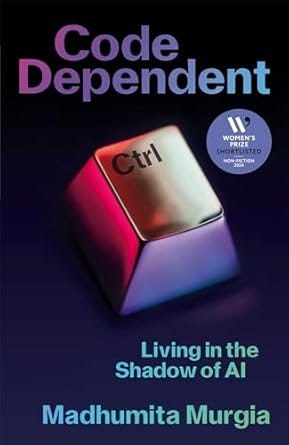
It’s my favourite because it presents a balanced view of different aspects of Artificial Intelligence, not just of GAI of genAI, (Generative Artificial Intelligence) which is the kind that has exploded recently.
Code Dependent is a reminder of how embedded AI has been in our lives over the past decades… and how badly it has been used. But there’s also some optimism and some celebration of the tech and all its potential for good.
Be gentle with me, I’m still learning…
As I’m practising how to express my opinions, as well as sharing a recommendation, I’ll draw from the notes I took down and comment on them, as “crispily” as I can. I’m not ready to write “a review” just yet, but I’m ok with practicing sharing my thoughts.
1. One for the other.
“Scalable systems like machine learning are built to benefit large groups, but tend to work well at the expense of some.”
The examples in the book of how those in the second camp have been exploited makes for some uncomfortable reading… (Though not as uncomfortable as the examples in chapter 2, on the generation and exploitation of pornographic images. Although I won’t cover it here, consider this side note a warning.)
2. An extension of humanity - for better or worse.
You might have heard me (or read me) saying that I’m not keen on naming humans as being better than genAI, without acknowledging that many times, we are comparing technology with THE BEST of humanity, not “humanity” overall. So I highlighted this:
“All crimes are happening offline, because everyone they are happening to is a human being, not a computer. The online component is just the weapon that’s being used, not the crime itself.”
(Quoting Carry Goldberg, Lawyer.)
So, it’s not genAI that’s the problem, but the humans who use it badly. (You decide the scope of “badly”...) In fact, someone else (Karl Ricaneck, AI developer) is quoted in the book as saying,
“The problem that we have is not the algorithms, but the humans.”
That’s the beauty of reading good books, the authors and those quoted in them put it so well, don’t they…
3. Let’s make the world a better place.
“Through my journey reporting on the effects of AI on human beings, healthcare was the one area where the technology felt like it had genuinely life-changing potential”.
(Thumbs up emoji!)
3a. Oh-oh…
“AI-enabled diagnostics were being offered as a premium service (in Delhi), an added package if you want to pay for it. That’s the market today.”
(Sad emoji…)
3b. Also on healthcare…
On being able to diagnose with AI in rural communities:
“When human beings are absent, technology comes a close second. It would just revolutionise the care we are able to give.”
(Thumbs up emoji returns!)
Wrapping Up
I could go on, but that’s enough.
So much for being crisp in my writing, but I practised sharing my opinions, so one out of two ain’t bad.
Code Dependent also has some terrible stories on how AI has been used badly to predict crime and deal with teenage pregnancy issues. Much like remote work, there’s excitement around the tech, but the influence of humans on it and the effect it has on humanity is neglected. The tech is great, the humans in charge, for whatever reason, not so much…
I wish I’d been able to share more smiley emojis with you. But what I liked about reading Code Dependant is that it reminded me that AI has been around for a while, and that there’s always a danger in how it’s implemented - not in the technology itself.
There were more moments which gave me hope in the book, like the description of the Rome Call, where three religious figureheads (from Islam, Judaism and the Catholic church) came together to propose six ethical principles for AI designers to live by. I wasn’t aware that this had happened, and it made me smile to think of technology bringing together people of different religious faiths.
Thank you for reading!
Let me know (and other readers) whether there are any books you’d like to recommend.
And if you like quiz games, I invite you to guess the other two books I might write about to complement this one. (Mum, you can’t play, as you’ve read them too… inside information and all that.)
Bonus, for making it to the end of the post (pretty much like the little extra scenes or outtakes you get after the credits in a film or tv series):
Some definitions I learned:
AI Alignment: making software compatible with human society
GPT algorithm: Generative Pre-trained Transformer
Data colonialism: “the extractive act of profiteering off the data of marginalised and vulnerable people to build AI systems.” (Yeap, I’m not going to try to paraphrase this one.)
Automation bias: “a widely studied phenomenon in which people start to become over-reliant on automation to do their jobs.” (Ditto)